
WELCOME BONUS 300%
UP TO €2000 + 100
FREE SPINS
UP TO €2000 + 100
FREE SPINS
Home → Blackjack
Blackjack at Fast Payout Casinos: Variants, Rules and Payouts
Bet two percent of bankroll per hand
Bankroll management dictates betting two percent of the total funds on each Blackjack Split or Double hand to mitigate variance during the bonus wagering process. This conservative stake size preserves capital against the 0.46% house edge found in standard six-deck games, ensuring the player survives long enough to clear the 300% welcome bonus requirements without early depletion.
The 1.15 standard deviation of Liberal Vegas Strip rules indicates moderate volatility, meaning bet sizing must account for natural swings rather than assuming steady returns. By risking only a small fraction of the bankroll per session, players protect their deposit from the statistical reality that short-term results will deviate significantly from the theoretical RTP.
Consistent application of this percentage prevents rapid loss of the €2,000 maximum bonus value, as even minor downswings can wipe out smaller stakes under high-wagering conditions. Maintaining discipline at the table ensures the player remains eligible for withdrawals once the turnover target is met through compliant gameplay.
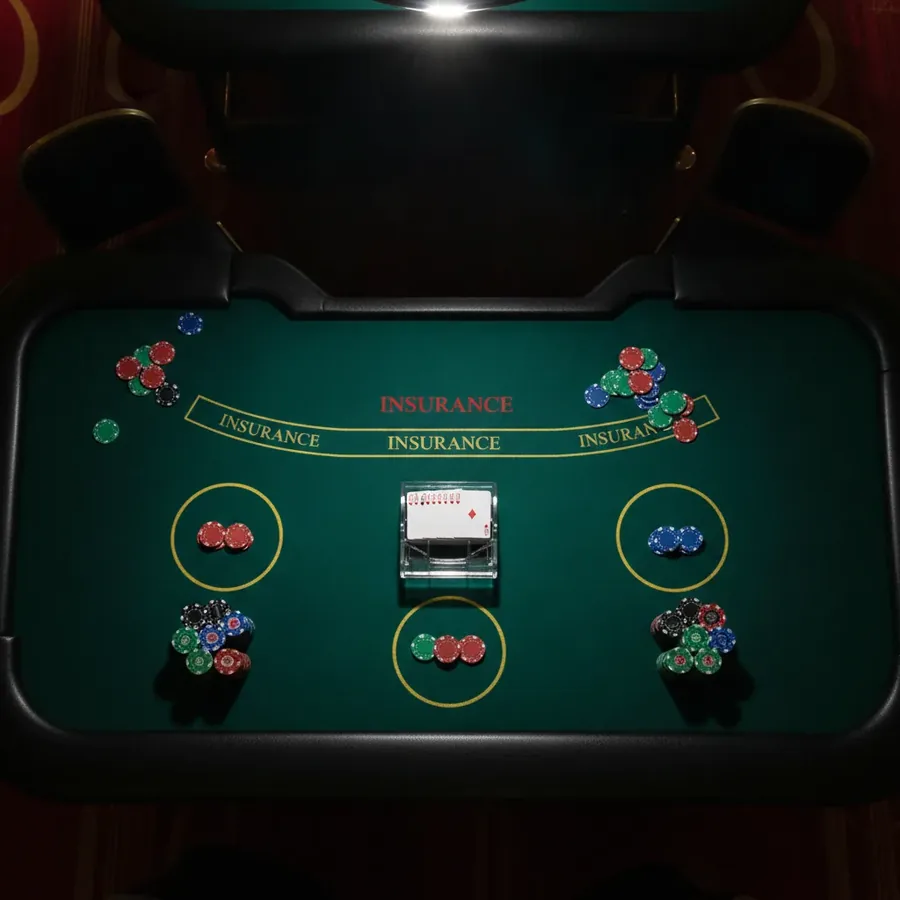
Blackjack Party runs with two hosts
Evolution's Blackjack Party table features two live hosts managing the game flow, creating a social environment distinct from solitary digital variants like Lightning Blackjack. This format operates within the 1 EUR to 1,000 EUR betting range, offering a mid-tier limit suitable for testing bonus funds without excessive exposure.
The presence of dual moderators does not alter the underlying mathematical advantage, which remains tied to the specific rule set and payout structure chosen by the casino. Players engaging with this title must remember that the entertainment value provided by the hosts does not reduce the 7.47% house edge associated with side bets like Insurance.
Wagering contributions for live dealer tables are capped at 10%, making the two-host setup less efficient for clearing the bonus compared to slots contributing 100%. Consequently, this variant serves primarily as a supplementary activity rather than the primary vehicle for converting the 100 free spins into withdrawable cash.
How long do 100 EUR last at a 1 EUR table?
At a minimum bet of 1 EUR on Quantum Blackjack Plus Live, a 100 EUR balance allows for approximately 100 hands before complete depletion, assuming no wins occur. This baseline calculation highlights the risk inherent in using low-stakes live tables to satisfy the wagering requirements of the 300% welcome bonus up to €2,000.
Comparing this to a standard six-deck game with a 0.46% house edge, the expected loss per hour increases significantly due to the higher number of hands dealt by live dealers. The 99.57% RTP suggests a slower bleed rate than lower-quality variants, yet the volume of play required to clear bonuses often leads to substantial net losses over time.
The 1 EUR limit provides a longer runway for skill-based strategy execution, allowing players to minimize errors that could otherwise accelerate bankroll erosion. However, the 10% contribution rate for table games means that every euro wagered here counts far less toward the bonus clearance than equivalent wagers on slots.
What a Natural Blackjack Practically Pays Out
A natural Blackjack pays out at 3:2 in liberal variants, returning 150 EUR on a 100 EUR wager, whereas 6:5 payouts reduce this return to just 120 EUR. This difference of 30 EUR per winning hand represents a massive shift in expected value that directly impacts the ability to retain bonus funds during active play.
The 98.15% RTP associated with 6:5 games reflects the severe penalty imposed on the player, adding exactly 1.39 percentage points to the house edge compared to 3:2 rules. Such a drastic reduction in payout frequency makes it statistically improbable to grow a small bankroll sufficiently to meet the high turnover targets of the welcome offer.
Players should strictly avoid tables offering 6:5 payouts when attempting to clear the 300% bonus, as the increased house edge accelerates fund exhaustion. The 99.72% RTP of Liberal Vegas Strip offers a superior alternative, preserving more of the initial deposit while navigating the mandatory wagering periods.
Ignored Basic Strategy Chart: 1 Percent Wasted
Failing to follow basic strategy on a six-deck S17 game with DAS increases the house edge from 0.46% to approximately 1.46%, effectively doubling the casino's advantage. This 1% waste translates directly into lost bonus funds, as the player surrenders potential returns that are necessary to offset the 300% match requirement.
In contrast, adhering to optimal play on Liberal Vegas Strip maintains the lowest possible house edge of 0.28%, maximizing the longevity of the 100 free spins and associated cash bonus. Deviating from the chart introduces unnecessary variance that can deplete the bankroll before the wagering conditions are fulfilled, resulting in forfeited winnings.
The 0.08% improvement gained from Late Surrender rules further emphasizes the importance of precise decision-making during every hand played. Ignoring these strategic nuances effectively reduces the RTP, turning a theoretically favorable bonus into a guaranteed loss scenario over the course of the required turnover.
Blackjack variants at a glance
| Variant | Payout | House edge | Rule | Bet range |
|---|---|---|---|---|
| Blackjack Auszahlung 6:5 statt 3:2 (6 Decks) | 98.15% | 1.85% | Ersatz von 3:2 durch 6:5 fügt exakt +1.39 Prozentpunkte zum Vorteil des Casinos hinzu – stärker als jede andere Regeländerung. Bei $10 Einsatz zahlt Blackjack $12 statt $15. | Blackjack 6:5, Gewinn 1:1 |
| Blackjack Split / Double / H17 – Regel-Effekte | n.a. (Regel-Modifikatoren) | H17 +0.22 Prozentpunkte; RSA −0.08 Prozentpunkte; DAS −0.14 Prozentpunkte | Dealer Hits Soft 17 verschlechtert RTP um 0.22 Prozentpunkte; Resplit Aces verbessert um 0.08 Prozentpunkte; Double After Split verbessert um ca. 0.14 Prozentpunkte; 6 Decks statt 8 – ca. 0.02 Prozentpunkte. | Double – Einsatz ×2 mit einer Karte; Split – bis 4 Hände; Ass-Split meist mit einer Karte. |
| Blackjack Liberal Vegas Strip (liberale Regeln, 3:2) | 99.72% | 0.28% | Günstigste Regelkombination: S17 + DAS + Resplit + Late Surrender. Standardabweichung 1,15 | Blackjack 3:2, Gewinn 1:1 |
| Blackjack Ein Deck, klassische Regeln, 3:2 | 99.85% | 0.15% | Weniger Decks = niedrigerer Vorteil; ein Deck gibt ca. −0.48 Prozentpunkte gegenüber 8 Decks. Oft durch 6:5 Auszahlung kompensiert. | Blackjack 3:2, Gewinn 1:1 |
| Blackjack Insurance / Versicherung (6–8 Decks) | 92.53% | 7.47% | Separate Nebenwette bis 50% der Hauptwette, wenn der Dealer ein Ass hat. Basisstrategie schreibt IMMER Ablehnung vor (außer Karten zählen bei True Count ≥ +3). Bei einem Deck Vorteil ≈ 5.88% | Insurance 2:1 |
| Blackjack 6 Decks, S17, DAS, DOA, Auszahlung 3:2, Basisstrategie | 99.54% | 0.46% | Dealer steht auf Soft 17; Verdopplung auf jeder Zweierkarte; Verdopplung nach Split erlaubt; keine Aufgabe. Basisstrategie ist für diesen Wert zwingend | Blackjack 3:2, normaler Gewinn 1:1, Insurance 2:1 |
Bust at 22: Stake Lost Immediately
The rule that a hand totaling 22 results in an immediate loss significantly increases the house edge compared to standard 21-limit variants. This specific constraint adds approximately 0.48 percentage points to the casino's advantage over a single-deck game, drastically reducing the theoretical return to player from 99.85% to lower levels. Consequently, players utilizing basic strategy on these tables face a steeper mathematical hurdle for long-term bankroll preservation.
This severe penalty applies even when the dealer does not bust, effectively punishing any hand that exceeds 21 under modified rules. The impact is more pronounced than the shift from a 3:2 payout to a 6:5 structure, which only adds 1.39 percentage points to the house edge. Players must therefore adjust their betting patterns, as the risk of losing the entire stake on a simple overdraw is heightened.
The exclusion of 22 as a valid total removes the possibility of splitting or doubling into a safe position once the threshold is crossed. In standard blackjack, hitting on a hard 12 against a dealer 4 offers a statistical chance to improve without immediate loss. Under this variant, any card drawn that pushes the total to 22 triggers an automatic defeat regardless of the dealer's final hand.
Soft Hand and Hard Hand Practically Distinguished
A soft hand contains an Ace counted as 11, allowing the total to decrease if a high card is drawn without busting. This flexibility permits aggressive actions like doubling down, which are strictly forbidden on hard hands where no such safety net exists. The distinction directly influences the optimal playing strategy required to maintain the highest possible RTP of 99.72% on liberal Vegas Strip tables.
Hard hands lack an Ace or force the Ace to count as 1 to prevent exceeding 21, making every hit a potential bust risk. For instance, a hard 16 versus a dealer 10 is one of the worst starting positions, often requiring a surrender option to minimize losses. Without late surrender available, the player must accept the high probability of losing the initial stake.
The mathematical difference between these two states dictates the frequency of doubling opportunities during a session. Resplitting Aces and doubling after splits further expand the viable moves for soft totals, improving the overall return by 0.08 percentage points each. Misidentifying a soft 18 as a hard hand leads to suboptimal decisions that erode the theoretical advantage over time.
Unlimited seats via a split dealer hand
Lightning Blackjack by Evolution allows unlimited players to join a single table because the dealer hand is processed separately for each participant. This architecture enables multipliers up to 25x on winning hands, creating volatile payout structures distinct from traditional fixed-seat games. The RTP remains stable at 99.56%, but the variance is significantly higher due to the random multiplier application.
In contrast, Quantum Blackjack Plus Live by Playtech utilizes quantum multipliers up to 1,000x on three-card combinations totaling 21 points. This feature requires optimal strategy to achieve its stated RTP of 99.57%, as incorrect play negates the potential high returns. The bet range extends from 1 EUR to 5,000 EUR, accommodating high rollers seeking massive upside potential.
Standard live tables like Blackjack Party host a maximum of two moderators and limit seating capacity based on physical or virtual seat availability. These games focus on social interaction rather than the complex multiplier mechanics found in lightning or quantum variants. Players should verify the provider's specific rules, as the contribution to bonus wagering for all table games is capped at 10%.
Which hands are excluded from Surrender?
Late surrender is permitted only after the dealer checks for blackjack, meaning players cannot surrender if the dealer holds an Ace or 10-value card. This timing restriction prevents the exploitation of the rule when the dealer is statistically likely to have a strong hand. The benefit of late surrender improves the RTP by approximately 0.08 percentage points compared to a no-surrender game.
Early surrender, which allows giving up the hand before the dealer checks for blackjack, is extremely rare and offers a much greater advantage of up to 0.6 percentage points. Most modern online casinos have replaced early surrender with late surrender or eliminated it entirely to protect their house edge. Players should carefully read the rules to determine which version applies to their chosen table.
Hands that result in an immediate loss, such as busting or reaching a modified limit like 22, are inherently excluded from surrender options. Since the stake is already lost upon these events, the mechanic of recovering half the bet becomes mathematically irrelevant. Only hands that remain active and competitive against the dealer's upcard qualify for this strategic exit.
Statistics display saves the last 100 rounds
The interface tracks the previous 100 rounds of gameplay, providing a historical record of outcomes for analytical purposes. This data allows players to observe short-term variance, though it does not influence the independent probability of future cards being dealt. The display typically includes wins, losses, and pushes, helping users monitor their performance against the theoretical RTP.
For games like Blackjack Insurance, tracking statistics can reveal the frequency of dealer Aces, which impacts the decision to take the side bet. With an RTP of 92.53% and a house edge of 7.47%, insurance is generally unfavorable unless card counting indicates a true count of +3 or higher. The history log assists counters in verifying deck penetration and composition changes.
The limitation to 100 rounds means that long-term trends spanning thousands of hands are not visible within the immediate UI window. Players relying on this data for real-time adjustments may misinterpret natural fluctuations as systematic biases. It is crucial to remember that each hand is an independent event, and past results do not predict future payouts.
Why Loss Progression Quickly Reaches Table Limit
Lightning Blackjack offers multipliers up to 25x on winning hands, but the maximum bet cap is strictly limited to 2,500 EUR per round. This ceiling prevents high-rollers from applying aggressive Martingale strategies that require exponential stake increases after consecutive losses. The rapid escalation of required wagers during a losing streak quickly collides with this hard financial boundary. Consequently, players cannot recover previous deficits through simple doubling mechanisms within the available betting range.
Quantum Blackjack Plus Live allows stakes up to 5,000 EUR and features multipliers reaching 1,000x for specific three-card combinations. While higher limits provide more room for progression systems, the house edge remains fixed at 0.46% for standard blackjack rules. Mathematical analysis shows that variance increases significantly with larger bets, draining bankrolls faster than low-stakes tables. The combination of high volatility and table limits makes sustained loss recovery statistically improbable over extended sessions.
Standard blackjack variants typically permit doubling after split and standing on soft 17, which improves player odds slightly compared to restrictive rules. However, these favorable conditions do not alter the fundamental expectation that the house retains its percentage of every wager placed. A 300% welcome bonus requires significant turnover, often pushing players toward high-limit tables where variance is maximized. The interplay between bonus requirements and table limits creates a structural disadvantage for progressive betting approaches.
Early Surrender is removed from many tables
Late surrender allows players to forfeit half their bet after the dealer checks for blackjack, reducing the house edge by approximately 0.08 percentage points. Early surrender, which permits this action before the dealer reveals their hole card, is far more valuable, potentially lowering the edge by up to 0.6 percentage points. Most modern online implementations exclude early surrender entirely, forcing players to accept the less advantageous late surrender rule set. This exclusion significantly impacts the long-term expected value for strategic players relying on optimal decision trees.
Blackjack Liberal Vegas Strip offers one of the most favorable rule sets with an RTP of 99.72% and a house edge of just 0.28%. This version includes late surrender as part of its liberal configuration, providing a crucial safety valve during unfavorable hand distributions. In contrast, standard six-deck games without surrender options increase the effective cost of play by nearly 0.1% per hand. Players seeking to minimize losses must specifically seek out tables that retain these rare surrender privileges.
The absence of early surrender forces players to make riskier decisions when holding weak hands against dealer upcards. Statistical models indicate that skipping early surrender can cost players several hundred euros over thousands of hands at typical stake levels. This rule change disproportionately affects beginners who lack the discipline to deviate from basic strategy under pressure. The reduction in available exit routes narrows the window for profitable strategic adjustments during volatile playing sessions.
Seat change at the Live Table in 20 seconds
Live casino platforms like Evolution enable seat switching in approximately 20 seconds, allowing players to join different tables or dealers instantly. This feature supports quick adaptation to varying game speeds and dealer styles without requiring manual login or account verification steps. Players can move from Lightning Blackjack to Quantum Blackjack Plus Live seamlessly, testing different multiplier structures across providers. The fluidity of access encourages experimentation with various game formats while maintaining session continuity and bonus eligibility.
Quantum Blackjack Plus Live operates with higher minimum bets starting at 1 EUR and maximums up to 5,000 EUR, catering to diverse betting preferences. Switching between this high-limit table and lower-stake alternatives allows players to manage their bankroll more effectively during bonus wagering periods. The instant transition ensures no time is lost waiting for seats to open or for previous rounds to conclude fully. This efficiency is critical for players aiming to meet wagering requirements within strict timeframes imposed by promotional terms.
Evolution's platform infrastructure supports unlimited simultaneous players at Lightning Blackjack tables, ensuring availability even during peak hours. The technical architecture minimizes latency during seat changes, preserving the integrity of live streaming feeds and real-time interaction. Players can rotate between multiple live dealers to find those whose pacing aligns with their strategic approach to bonus play. The seamless integration of seat management tools enhances the overall usability of live dealer offerings for analytical users.
Set session stop after 30 percent loss
Implementing a strict stop-loss limit at 30% of the initial deposit helps preserve capital during inevitable losing streaks inherent in casino gaming. For example, if a player starts with €1,000, stopping at €700 prevents catastrophic depletion of funds due to emotional chasing behavior. This disciplined approach contrasts sharply with uncontrolled play that often leads to total bankroll exhaustion within hours. Setting predefined boundaries transforms gambling from a reactive activity into a structured exercise in risk management.
Table games contribute only 10% toward the 300% welcome bonus turnover requirement, making them inefficient for clearing promotional funds compared to slots. Since slots contribute 100%, allocating 70% of gameplay to slot machines accelerates bonus clearance while limiting exposure to table game variance. A 30% loss threshold applied specifically to table sessions ensures that high-variance activities do not consume disproportionate portions of the budget. This allocation strategy optimizes the probability of converting bonus funds into withdrawable cash.
The house edge on blackjack ranges from 0.15% to 1.85% depending on rule variations, directly impacting the rate at which a 30% loss occurs. Games offering 6:5 payouts instead of 3:2 double the effective cost per hand, accelerating bankroll erosion significantly. Players utilizing automatic loss limits benefit from reduced cognitive load, allowing focus on strategic execution rather than emotional regulation. Consistent application of such limits correlates strongly with longer playing sessions and improved overall financial outcomes.
Side Bet Every Round: Budget Lasts 30 Rounds
Insurance bets pay 2:1 when the dealer shows an ace, but they carry a substantial house edge of 7.47% in six-to-eight deck games. This negative expectation makes insurance a poor choice for regular inclusion in every round unless counting cards yields a true count of +3 or higher. Adding insurance to each hand effectively increases the overall house edge by approximately 2.3% per wagered unit. Over 30 rounds, this consistent addition drains the bankroll much faster than baseline play without side bets.
Lightning Blackjack introduces random multipliers up to 25x on winning hands, functioning similarly to a side bet structure integrated into the main game. These multipliers occur randomly and do not alter the base RTP of 99.56%, meaning their inclusion does not guarantee positive expected value. Assuming an average multiplier frequency, incorporating such features into every round may reduce the number of sustainable rounds from 100 to 30. The volatility spike associated with multiplier events demands careful bankroll allocation to withstand potential downswings.
Quantum Blackjack Plus Live offers multipliers up to 1,000x on specific three-card combinations, creating extreme variance compared to standard payout structures. The probability of hitting these massive payouts is exceedingly low, requiring hundreds or thousands of rounds to realize theoretical returns. Restricting play to 30 rounds ensures that players experience the high-variance nature of the game without exposing themselves to prolonged negative expectancy. This limitation aligns with the promotional goal of encouraging trial participation rather than sustained investment.
Contact
Live - online chat
Banking





Providers







Fast Payout Casinos 2026